How to Reclaim an Overgrown Pasture in Arkansas
Overgrown pasture in Arkansas? See how forestry mulching reclaims cedar-choked ground, when land clearing is the better call, and what the process looks like.
By Brice Contracting
Pastures don’t stay clear on their own. Give Arkansas land a few years without active management and you’ve got a cedar problem. Give it a decade and you’ve got a timber problem. What used to be open grazing ground slowly disappears behind brush, scrub trees, and dense undergrowth until it’s not functional for anything.
The good news is that reclaiming overgrown pasture is straightforward when you use the right method. Here’s what the process looks like and how to think through which approach fits your property.
Why Arkansas Pastures Grow Back So Fast
Eastern red cedar is the main culprit across Central and Northwest Arkansas. It spreads aggressively into open ground, tolerates drought, and once it gets established it shades out the grass underneath it. A pasture with a handful of cedar trees becomes a cedar thicket faster than most landowners expect.
Beyond cedar, you’re typically dealing with persimmon sprouts, blackberry, sweetgum, and whatever hardwoods have seeded in from the tree line. Left alone long enough, you end up with a mix of woody brush and young timber that grass can’t compete with.
The longer it goes, the more it costs to fix. Cedar and brush that’s been established for three or four years is a bigger job than brush that’s been growing for one season. If you’re looking at a pasture that’s been neglected, sooner is better than later.
Forestry Mulching Is the Right Tool for Most Pasture Jobs
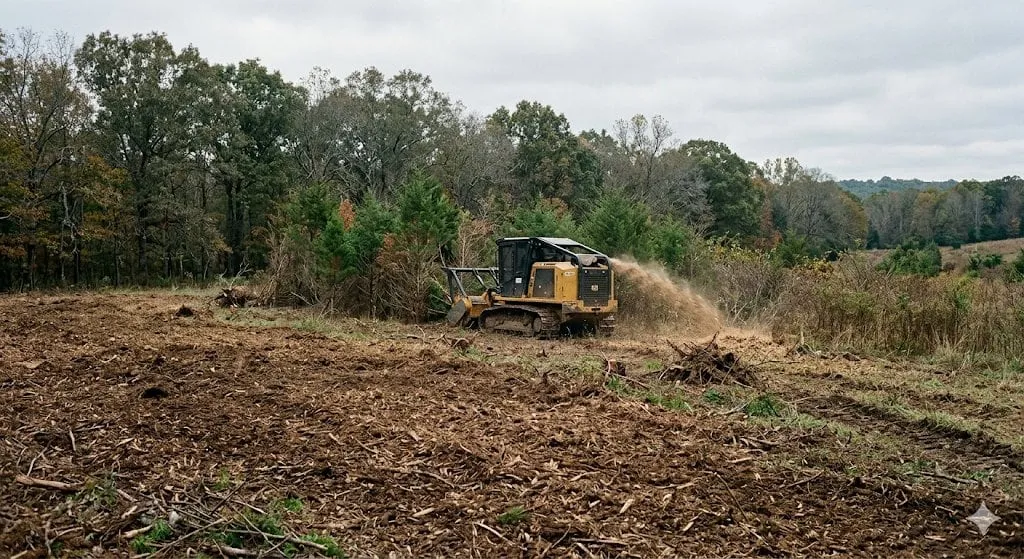
For most pasture reclamation work in Arkansas, a forestry mulcher is the best approach. One machine grinds cedar, brush, and small trees into a layer of natural mulch right where they stand. No hauling, no burn piles, no separate erosion control step.
What you’re left with is a clean mulch layer over intact topsoil. That mulch breaks down over six to twelve months and actually improves the soil underneath it. You can broadcast grass seed directly into it and have coverage established within a season. For a landowner who wants open, usable pasture again, that’s exactly the result you’re after.
We handle trees up to about 8 to 10 inches in diameter with the mulcher. For larger trees that have gotten established in the pasture, we’ll fell them first and then mulch the stumps and leftover brush. Projects start at $2,500, and a typical one to three acre pasture job runs one to two days.
When Land Clearing Makes More Sense
Mulching is the right call for most pasture reclamation, but there are situations where traditional clearing with excavators and dozers is the better approach.
If the plan is to convert the land to crop ground, you need bare, worked soil rather than a mulch layer on top. Row crops and tillage require soil that’s been fully cleared and prepared, not just mulched over. In that case, we bring in the heavier equipment, pull trees out by the root, grind stumps, and get the ground ready for whatever agricultural use comes next.
Similarly, if the pasture has a significant number of large trees that need full removal, or if you’re also doing grading and pond work as part of the project, land clearing gives you more flexibility in terms of what you can do with the ground afterward.
When you’re not sure which way to go, walk us through what you want the land to look like when it’s done. That answer tells us which method makes sense.
What the Process Looks Like
Estimate and Site Walk
We come out to the property, walk it with you, and see what we’re dealing with. Acreage, density of brush, tree sizes, terrain, and access all factor into the quote. We’re not going to give you a number over the phone without seeing the land.
The Clearing Day
For a forestry mulching job, we show up with the track machine and work through the property systematically. Cedar, brush, and undergrowth get ground up on the first pass. Depending on how dense things are and whether larger trees need to be felled first, most residential pasture jobs wrap up in one to two days.
Seeding and Grass Establishment
Once the mulching is done, you can seed directly into the mulch layer. Warm-season grasses like bermudagrass and fescue establish well in reclaimed Arkansas pastures. If you want us to handle seeding as part of the project, we do hydroseeding and standard seeding. If you’d rather manage the seeding yourself, the ground will be ready for it when we’re done.
What to Tell Us When You Call
The more information you have ready, the more accurate the estimate will be. It helps to know the approximate acreage you’re trying to reclaim, the general density of what’s growing on it, whether there are large trees mixed in with the brush, and what you’re planning to do with the pasture once it’s cleared. Grazing livestock, hay production, and hunting property all have slightly different requirements when it comes to the end result.
We provide free estimates and respond within 24 hours. The owner will come out, walk the property, and give you a straight quote based on what he actually sees. Reach out here to get the process started.
We Grew Up in Cattle Country
Brice Contracting started in construction and cattle country. Overgrown pastures are something we’ve been dealing with our whole careers. We know what healthy reclaimed ground looks like in Central and Northwest Arkansas, and we know how to get there efficiently.
If you’ve got acreage that’s grown up and you want it back, give us a call. One site visit and you’ll know exactly what it takes. Get your free estimate here.
Got a pasture that’s disappearing into cedar? Get a free estimate or learn more about our forestry mulching service and land clearing service.